

- Buildings Insurance
Is building insurance the same as home insurance?
Buildings insurance and home insurance aren't the same thing, though people often use the terms interchangeably. Buildings insurance covers your property's structure specifically; home insurance is the broader umbrella term for policies that combine buildings and contents cover. This guide explains what each protects, who needs which type, and how to choose the right policy for your situation.
We'll also cover common exclusions, how to calculate your home's rebuild cost, and where home contents insurance fits in.
What you need to know
- Building insurance covers the structure of your home and permanent fixtures
- Home insurance is an umbrella term that can combine building and contents insurance protection
- Landlords need landlord insurance or landlord building insurance for their rented property; tenants need contents cover for their own possessions
- Most mortgage lenders require buildings insurance before exchange contracts, though it isn't a legal requirement in itself
- Many insurance providers offer optional extras and specialist policies
- Update your cover when your circumstances change
Building insurance vs home insurance: quick comparison
Here's how the two compare, including how Rivr's own high value home insurance fits in:
| Buildings insurance | Home insurance (buildings + contents) | |
|---|---|---|
| What it covers | The structure: walls, roof, floors, fixed kitchens and bathrooms, and permanent fixtures | Everything buildings insurance covers, plus your belongings (valuables, furniture, etc.) |
| Who typically needs it | Homeowners and freeholders/landlords | Homeowners who own both the structure and the contents |
| Legal requirement? | No, not a legal requirement in the UK | No, not a legal requirement either |
| Mortgage lender requirement? | Yes, lenders typically require this before exchange | Same requirement for the buildings element; contents cover is optional |
| Flood cover | Usually included as standard | Usually included as standard on both elements |
| Average UK premium (ABI, 2026) | About £306 a year | About £375 to £383 a year combined |
| Rivr's high-value cover | Rebuild cover up to £3 million, with cover available above that by exception | Same £3 million standard limit, plus contents cover up to £500,000 |
| Who arranges it if you rent | Your landlord | Your landlord covers the buildings; you still need your own contents policy |
Rivr makes high-value cover simple, fast, and built around you. Get a quote in minutes.
What buildings insurance covers
Building insurance covers your home's structure from specific risks. Buildings cover pays for repairing damage from events like fire or storm. Contents insurance covers your personal belongings separately.
This table shows what buildings insurance covers damage from under standard policies. Significant exclusions apply, including gradual damage, wear and tear, and certain subsidence types. Read the full policy wording and IPID before purchase.
| Usually covered | Depends on policy / add-ons / limits | Usually not covered |
|---|---|---|
| Fire, smoke, explosion | Accidental damage cover (often add-on) | Wear and tear / poor maintenance |
| Storm damage to roof/walls | Theft of fixtures (security conditions apply) | Damp, condensation, mould |
| Burst pipes (sudden escape of water) | Fences, gates, boundary walls (only when main building also damaged); sheds/garages (standard terms apply) | Gradual leaks/seepage |
| Flood (exclusions apply) | Subsidence (strict conditions apply) | Defective workmanship/materials |
| Impact (vehicle/falling tree) | Vandalism, frozen or burst pipes (when occupied; vandalism excluded after 45+ days unoccupied) | Pest/vermin damage |
Buildings insurance, contents insurance, or both?
Buildings insurance protects the structure of your home: roof, walls, floors, fitted kitchen and bathroom, outbuildings, and permanent fixtures.
Contents insurance covers your personal belongings: furniture, electronics, appliances, clothing. Your own possessions need separate protection from the building itself.
Most homeowners need both types of insurance policies. If you have a mortgage, your lender will almost certainly require buildings cover as a condition of the loan, even though it isn't a legal requirement in itself. Tenants in a rented property need contents insurance only. Landlords need landlord building insurance for the structure, plus contents cover if the property is furnished.
Combined buildings and contents vs separate policies
A combined policy covering building and contents insurance protects both your property and your belongings. Combined buildings and contents insurance policies vary, so check the limits and exclusions match your coverage needs.
For listed buildings or high value items, separate insurance policies give you more control over the right cover. Rivr offers standalone contents insurance policies with coverage for high value items. Policy limits and terms vary.
What does buildings insurance protect against?
Standard buildings cover includes damage caused by:
- Fire
- Flood and natural disasters
- Storm
- Vandalism (when occupied)
- Subsidence (strict conditions apply)
- Burst pipes
Optional extras on many insurance providers' policies:
- Accidental damage cover (protects against accidental damage from everyday mishaps)
- Alternative accommodation cover (if your home becomes uninhabitable)
- Legal expenses
- Home emergency cover
- Personal possessions outside the home
Holiday homes or properties left unoccupied for extended periods need specialist insurance policies.
Understanding rebuild costs
Buildings cover is based on rebuild costs, not market value. Your home's rebuild cost is the full cost of reconstructing your property from scratch: materials, labour, professional fees including architects fees and surveyors' fees, debris removal, legal fees, and compliance costs.
The cost of rebuilding is usually lower than your home's market value. Your home insurance policy must reflect the current rebuild cost. Underinsurance leaves you exposed.
Who arranges cover?
- Homeowners: Both buildings and contents insurance
- Landlords: Landlord insurance for the rented property structure. Contents insurance if furnished
- Tenants: Contents insurance for their own possessions in the rented property
Case study: when the unoccupancy exclusion held up
Aviva declined Mr R's water-damage claim after his property sat empty for months, well past the policy's 60-day unoccupancy limit. He said family had stayed regularly, but the evidence didn't support it, no receipts, no proof, and his brother's account contradicted his own. The Ombudsman agreed the exclusion applied fairly and didn't uphold the complaint.
What this case highlights:
- Buildings insurance can decline cover once a property passes the policy's unoccupancy limit, often 30 to 60 days depending on the insurer.
- "Occupied" usually means genuinely lived in, regularly cooking, washing, sleeping there, not just occasional visits.
- Without solid proof, receipts, verified records, consistent accounts, claiming a property was occupied may not hold up.
How to calculate your home's rebuild cost
Your home's rebuild cost is essential for adequate cover. Here's how:
- Check your property details: Deeds or mortgage documents list your home's size and construction
- Use a rebuild cost calculator: Free online tools from insurers and industry bodies
- Get professional advice: For unusual or listed properties, use a surveyor
To get an accurate figure:
- Use a rebuild cost calculator (e.g. BCIS)
- Or ask a chartered surveyor for non-standard properties
Buildings insurance is based on rebuild costs, which is usually lower than market value.
How to choose the right policy
Get the right level of cover
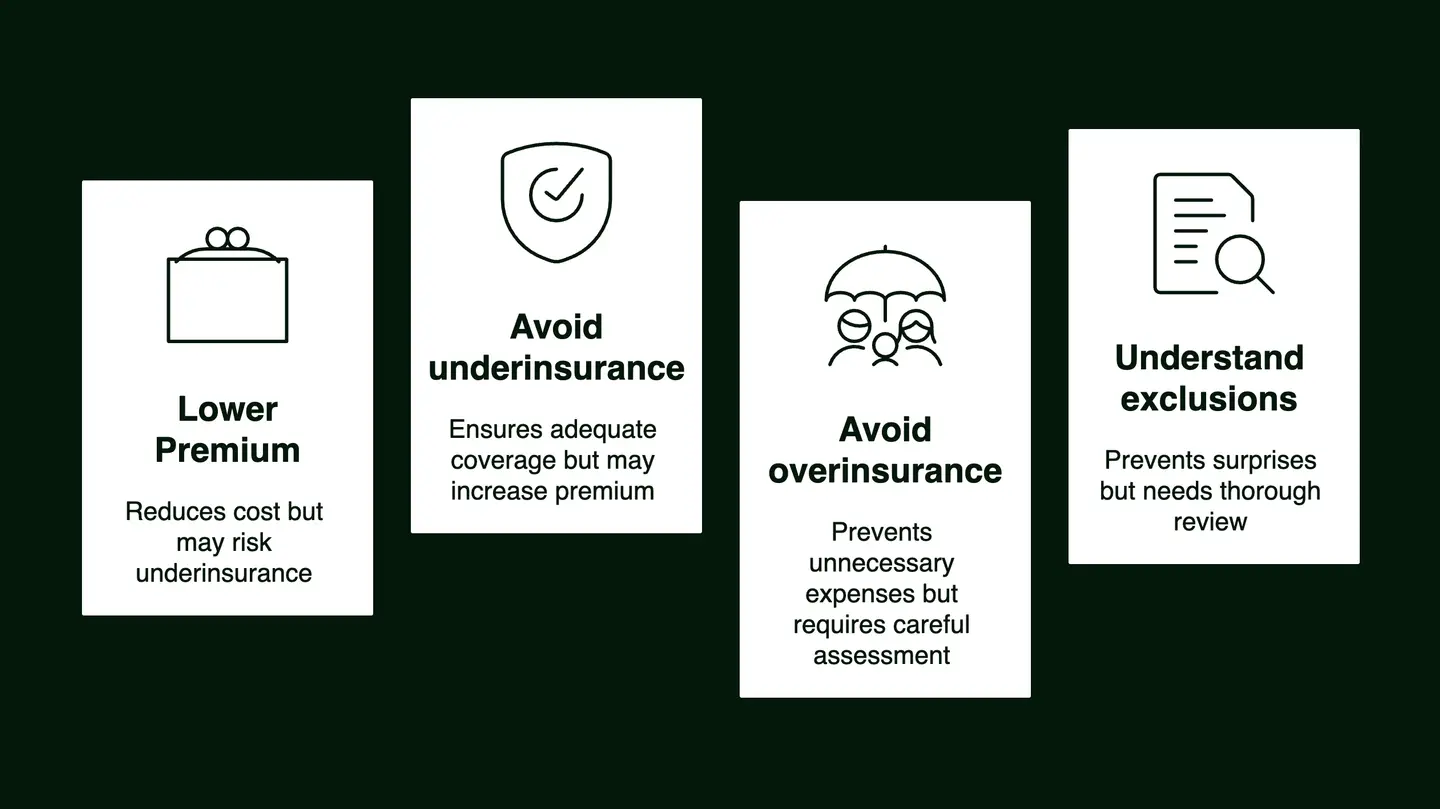
Several factors affect your coverage needs: property type, risk profile, and rebuild costs. The cheapest option isn't always the right insurance. Choose comprehensive cover that matches your situation to insure your property properly.
Lower your premium without cutting protection
Review your home insurance policy yearly, especially after home improvements or large purchases. Approved security features (smart alarms, CCTV, reinforced locks) reduce your premium without compromising protection.
Increase your voluntary excess (the excess amount you pay towards a claim) to avoid higher premiums. Only do this if you can afford the excess amount when you claim.
Bundling insurance policies (home and car) often gets you discounts. A no-claims bonus and Neighbourhood Watch membership can also reduce your premium.
Get the valuation right
Underinsurance leaves you exposed. Overinsurance means paying too much. Use online rebuild cost calculators and inventory your contents to ensure adequate cover.
Know what's excluded
Standard home insurance policies don't cover:
- Wear and tear or gradual deterioration
- Neglect or poor maintenance
- Pest or infestation damage
- Pre-existing damage
- Homes left unoccupied for extended periods (more than 45 consecutive days) face major coverage restrictions. Fire and storm remain covered, but theft, vandalism, escape of water (unless specific conditions are met), and accidental damage are excluded.
If anything is unclear, contact your insurer. Listed properties or homes in flood zones need specialist cover. Check what structural damage your home insurance policy covers.
Checklist: how to choose the right home insurance
- Do you own or rent your home?
- Do you need buildings, contents, or both types of cover?
- Have you calculated your rebuild cost accurately?
- Have you checked for exclusions or policy limits?
- Have you compared quotes from multiple providers?
- Do you need any optional extras, like legal cover or emergency assistance?
- Are you reviewing your policy annually to stay protected?
Buildings and home insurance for those with more to protect
Rivr is a digital-first insurer specialising in high value home insurance. Buildings cover goes up to £3 million rebuild cost as standard, with cover available above that by exception. Quotes come back online in minutes, checked by a human underwriter before your policy is confirmed. Add contents cover up to £500,000, including higher limits for jewellery and other valuables. Manage it all from one account, with an adviser on hand when you need one.