
- Home Insurance Guides
What is Home Emergency Cover?
Home emergency cover gets a trusted tradesperson to you fast when something urgent makes your home unsafe or unusable. It can be an add on, included on higher tier policies, or bought as a standalone plan. It pays the call out, labour, and parts up to a limit for things like burst pipes, boiler breakdowns, or power cuts, covering the immediate fix rather than routine servicing or long term repairs.
At a glance
- Usually an optional add-on to home insurance.
- Funds urgent call-outs and repairs for essential services.
- Often capped per claim with common exclusions and waiting periods.
- With Rivr home insurance, emergency cover is included where shown on your schedule.
Sources: Financial Ombudsman Service, MoneyHelper, Citizens Advice. Reviewed October 2025.
What is home emergency cover?
It is a service contract that arranges and pays for rapid help when a sudden problem risks damage or makes the home unliveable, for example no heating in winter, uncontrollable water leaks, total power failure, broken external doors or being locked out.
You contact a 24 hour helpline, the provider appoints an approved engineer, and the policy funds the call out, labour, and parts up to a per claim and annual limit, usually with an excess and sometimes a cap on visits.
It is different from buildings or contents insurance, which pays to repair the underlying damage after the event. Emergency cover focuses on making the property safe and usable again, not routine upkeep.
How home emergency cover works
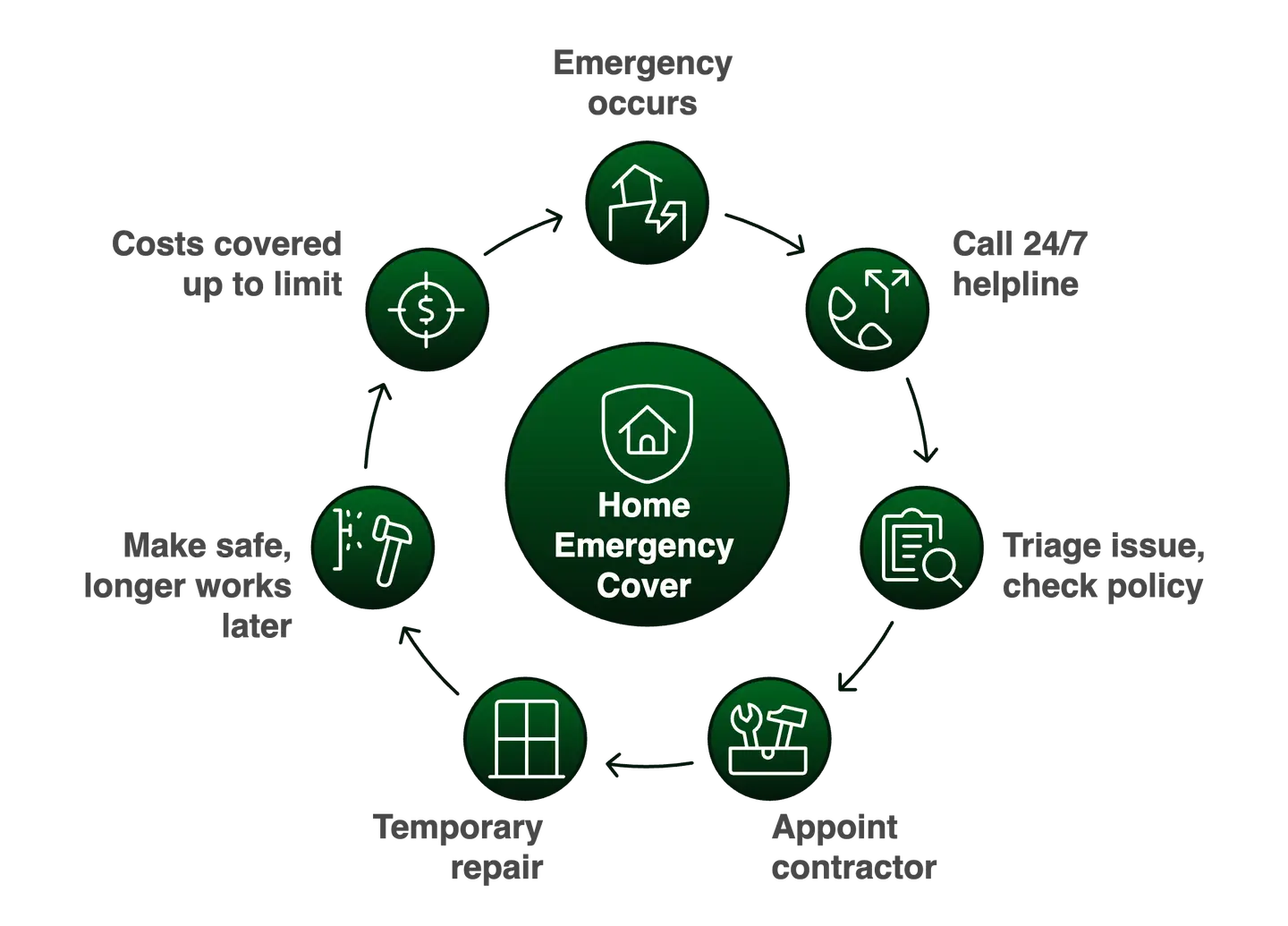
You call a 24/7 helpline when an emergency happens. The insurer triages the issue against the home emergency policy, then appoints a local contractor to attend. Response times can lengthen in bad weather, so keep your schedule and policy wording handy to speed triage.
The contractor makes a temporary repair or, if similar in cost, a permanent repair that gets the home safe and usable. Think of this as urgent repairs that prevent further damage and remove any immediate security risk. For example, a broken window is boarded or internal electrical faults are made safe.
The policy will cover costs for call out charges, labour, parts and materials up to the limit. Any wider loss, such as damaged flooring after a water leak, usually sits with buildings or contents insurance. Financial Ombudsman casework reflects this split between emergency attendance and reinstatement.
Worked example
A burst pipes incident on a Sunday night. At 9.10pm you find water pouring from waste pipes and no hot water. You ring the emergency number, are triaged, and a plumber is sent with a 90 minute estimate.
By 11.15pm they isolate the main heating system, replace a split section of water pipes, and restore hot water. The emergency policy paid the call out, two hours of labour, and parts within the claim limit. Warped laminate was a buildings claim handled later.
High value homes, build a rapid response site pack
“Create a site pack and keyholder protocol with your emergency provider. Include an annotated floor plan showing water stopcocks, gas shut off, plant room layout, and boiler model and serial numbers, plus access notes such as gate codes.
This lets a contractor act within minutes, even if you are away, cutting further damage. Store the pack securely, share only with named keyholders, and confirm unoccupancy inspection requirements and that alternative accommodation limits suit your household.”

Will Clarkson Webb
Founder & CEO at Rivr
What is usually covered
Cover focuses on total failure of essential services or urgent situations that leave the home unsafe. Typical inclusions are boiler breakdown, faults in the central heating system, burst pipes, internal drainage, electrical failure, broken locks or windows, blocked drains, roof damage that exposes the interior, lost keys, and pest infestations in living areas.
Policies may also respond to blocked sinks, unsafe gas pipes after the network has isolated supply, and a power cut traced to an internal fault. Some policies contribute to overnight accommodation where the home is temporarily uninhabitable. Always check the claim limit and any caps on parts or labour in your schedule.
What is usually not covered
General exclusions commonly include wear and tear, pre existing faults, routine maintenance, cosmetic only repairs, and long term works beyond the temporary repair. Appliances that are not part of the main heating system are often excluded, as are outbuildings for many perils. Some policies have a first 48 hours waiting period, and certain allowances have separate waiting periods.
Unoccupied properties frequently face restrictions. Many policies reduce or exclude cover after around 30 consecutive days, and some apply a seven day wait after re occupation. Check your wording and schedule to see how unoccupancy interacts with a home emergency claim.
Home emergency insurance vs standard home insurance
A practical rule helps. Emergency cover pays to stop the emergency now, keep the home safe, and restore essential services. Standard home insurance pays to cover damage and loss after the incident, such as redecorating or replacing damaged items.
| Scenario | Home emergency cover | Standard home insurance |
|---|---|---|
| Burst pipes on Sunday night | Plumber attends, isolates leak, urgent repair to stop damage | Pays to reinstate floors, ceilings, and decoration |
| Total failure of heating or hot water | Engineer attends, restores essential heat or hot water if possible | Usually no, but may cover resulting damage from an insured peril |
| Internal electrical failure | Electrician attends, makes system safe, restores supply where possible | Usually no, unless there is insured damage to reinstate |
| Network power cut | Not covered for external outages, contact your distribution network operator | Not applicable, no insured damage to reinstate |
| Broken locks or smashed window | Board up or secure to remove immediate security risk | Replaces doors or glazing where the peril is insured |
| Roof damage exposing interior | Temporary repair, weather permitting, to make interior safe | Permanent roof works and interior reinstatement if peril is insured |
| Pest infestation in living areas | Attendance to remove or control covered pests | Usually no, unless a specific add on applies |
| Lost keys for main external door | Gain entry or replace locks within policy limits | Generally not covered |
Scope varies by provider. Check your schedule for limits, waiting periods, and exclusions.
Do you need it?
Owners and landlords may prefer predictable costs and rapid access to a local tradesperson rather than ringing around. If you travel or have a larger property, a total failure of hot water or central heating can escalate, so some choose extra protection.
Renters should check the tenancy agreement before they buy home emergency cover. For most assured shorthold tenancies the landlord must maintain the central heating system, electricity supply, and structure, so tenants may not need home emergency cover unless the agreement shifts locks or similar items.
If you prefer one point of contact, you can add home emergency cover at renewal, or arrange home emergency cover separately where the provider allows. If you keep a trusted trades list and savings, you might self fund emergency repairs instead.
What it costs and the limits to watch
A single emergency visit can exceed a year’s premium, especially for urgent electrics or a broken down boiler. If you would otherwise pay extra at short notice, emergency home insurance can smooth cash flow and cover costs for call outs, labour, and parts up to the claim limit.
Check whether policies cover older boilers and any requirement for proof of servicing. Some wordings only consider a replacement boiler if an economical repair is not possible. Many policies fund a temporary repair first, with any longer reinstatement handled by buildings or contents cover.
How to choose, a simple checklist
Use this checklist and cross check the small print:
- Is it an optional add on or a standalone policy?
- Per claim and per year limits fit your risk
- Waiting period, age and service requirements for boiler replacement and wiring
- Call out, labour and parts included, any caps on parts
- Helpline availability and typical response in your area
- Inclusions match your risks, for example electrics, drains, locks
- Exclusions you can live with, for example outbuildings, wear and tear
- What your home insurance already includes, to avoid duplication
Rivr cover, how we approach emergencies

Rivr covers high value homes and contents under one combined policy. Property Emergency is included as standard, you call us 24/7. We send a vetted tradesperson for urgent issues like no heating, serious leaks, internal electrics, locks or glazing, pests, or roof damage exposing the interior.
Costs are covered up to your schedule limit, with any excess and waiting periods set out in your home insurance policy documents.
Speak to our team today and experience digital-first insurance tailored to your lifestyle.
About the author

Will Clarkson Webb
CEO at Rivr